


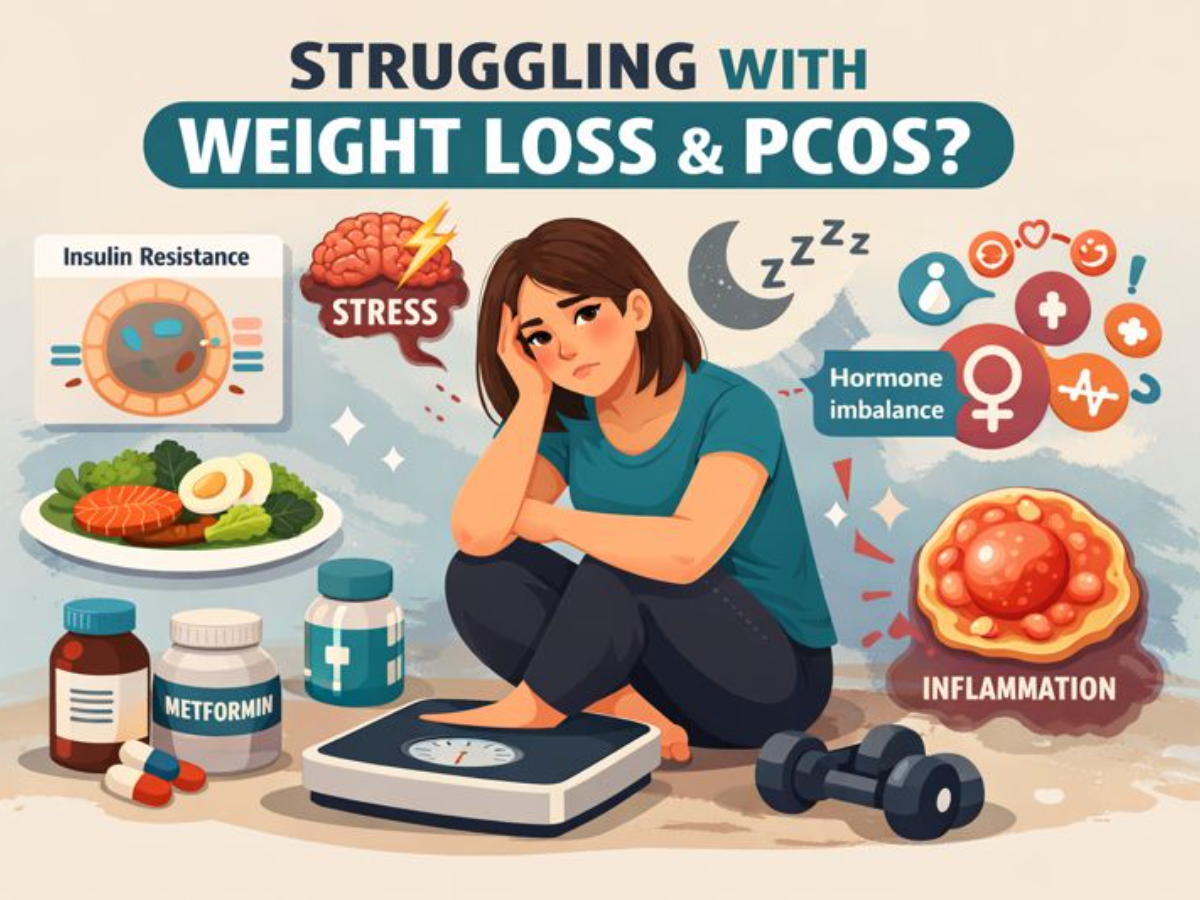
Introduction
You’re eating better. You’re exercising. But the scale won’t move. If you have PCOS, this frustration is more common than you think. You’ve cut carbs, avoided sugar, and tracked every calorie—but the scale barely moves. If you’re asking, “Why can’t I lose weight with PCOS?” you’re not lazy or doing anything wrong. PCOS changes how your body processes food, stores fat, and manages hormones, making weight loss more challenging than usual.
Your body reacts to food and stress and movement because you have a hormonal condition that creates metabolic changes. Most people do not recognize this aspect of your condition.
The process of losing weight becomes exceptionally difficult for women who suffer from PCOS. The situation requires more than willpower to control food intake. The body experiences a silent process which affects its internal functioning.
We will discuss the matter through honest statements and realistic observations while eliminating all elements of diet culture.
Internal Resource — Inositol & PCOS Support: For a natural approach to supporting hormonal balance and fertility in PCOS with inositol, see Inositol and PCOS: A Natural Ally for Hormones and Fertility .
What does it really feel like when your weight doesn’t budge due to PCOS
If you’re trying to lose weight with PCOS, you’ve probably experienced moments where you feel stuck.
You’re probably thinking, “I’m eating , eating better, I’m walking every day, I’m eating less sugar – why isn’t anything changing?”
For a few weeks, it seems like you’re trying harder than ever, but the scale refuses to budge. Like, It can be frustrating to watch others lose weight and lose it easily , easily while you’re doing everything “right” and still not seeing results.
Seriously, There are days when you really feel like your body is working against you. And yes, you can try different diets, force yourself to exercise more, and sometimes skip meals—but nothing really seems to make a difference.
Guess , Guess what? At some point, motivation fades. You start asking yourself, “Am I doing something wrong? Or is my body like this?”
And the hardest? And yes, the people around you might not understand. Seriously, They think its just a matter , matter of eating less or exercising harder, but they don’t realize how different things are when , when treating PCOS.
If any of this sounds familiar, you’re not alone—and more importantly, there are real reasons why.
PCOS and Weight Loss Challenges
PCOS affects how your body processes food, regulates insulin, and stores fat, making traditional dieting less effective. Many women follow the same meal plans that work for others but see little or no weight loss. This can be frustrating and impact self-esteem. Hormonal imbalances signal the body to store fat and maintain blood sugar, which means calorie restriction alone often doesn’t work.
🌿 Natural Ways to Balance Hormones in Women
Discover simple, science-backed lifestyle changes that help support hormone balance naturally, including diet, sleep, stress management, and daily habits.
The Hidden Factor Which Prevents Weight Loss
The main reason weight loss is so difficult with PCOS is insulin resistance. Normally, insulin moves sugar from the blood into cells for energy, but in insulin resistance, cells don’t respond properly. Your body compensates by producing more insulin, which promotes fat storage—especially around the abdomen—and triggers strong cravings. This makes dieting feel like a constant uphill battle, even when you’re following all the right steps.
Why PCOS Makes Weight Loss Hard
Many women think eating less is the key to weight loss, but for those with PCOS, extreme dieting can backfire. When the body senses starvation, stress hormones like cortisol rise, slowing metabolism and making fat loss even harder. Crash diets or prolonged fasting can lead to muscle loss while fat stores remain, making weight rebound likely. Sustainable, balanced eating is far more effective than restriction.
Internal Resource — PCOS Hair & Skin Issues: For common causes and effective remedies for hair loss and skin problems associated with PCOS, see Causes and Remedies for Hair Loss and Skin Problems in PCOS .
The Stress–Cortisol–PCOS Weight Trap
Chronic stress is a major barrier to weight loss in PCOS. Stress raises cortisol levels, which encourages abdominal fat storage, worsens insulin resistance, and disrupts sleep. Overdoing “healthy habits”—like excessive exercise or obsessing over food—can backfire, keeping the body in a constant stress loop. Often, slowing down and focusing on fewer, consistent actions produces better results.
The Hidden Role Of Inflammation
Low-grade inflammation is another hidden obstacle in PCOS weight loss. Poor sleep, processed foods, chronic stress, and overtraining all contribute. Inflammation worsens insulin resistance and hormonal imbalances, making fat loss harder. Sleep is especially critical: lack of rest raises hunger hormones, cortisol, and cravings, creating a cycle that undermines dieting efforts.
Polycystic ovary syndrome weight loss compared to normal weight loss
If you feel that losing weight is more difficult for you than others, you’re not imagining it. Women , Women with PCOS face a variety of biological challenges that can slow down development—even when they’re doing everything “right.”
🔹The difference in insulin resistance
In normal weight loss, the body , body uses insulin efficiently to regulate blood sugar and energy. Insulin resistance is common , common in PCOS, that means that the body produces more insulin than , than it needs. This high insulin level stimulates fat storage and makes it harder , harder for the body to burn fat.
🔹Fat storage mechanism
In people without PCOS, fat storage and fat burning are more balanced. But with PCOS, the body , body is more likely to store fat—especially around the belly—even with moderate calorie intake. Like, Because of this, weight , weight gain can happen easily and losing it requires more effort.
🔹Slow metabolism
The hormonal imbalance of PCOS can slow down your metabolism, that means your body burns fewer calories at rest. Because of this, traditional weight loss methods are less effective and require more consistency and patience.
Exercise and Weight Loss in PCOS
Exercise is important, but not all workouts help PCOS weight loss. High-intensity or excessive cardio can raise cortisol, increase fatigue, and trigger hunger. Gentle strength training, walking, and moderate activity are more effective, supporting energy levels and hormonal balance without overtaxing the body.
The Emotional Cost Of Dieting With PCOS
We need to discuss the emotional impact because it holds significant importance in our lives.
PCOS dieting creates a psychological burden which leads to emotional exhaustion for most people. You keep pushing yourself forward while everything remains unchanged. Your emotional well-being suffers through silent accumulation of distress.
People usually experience feelings of guilt and shame and frustration that they find totally normal.
Mayo Clinic — PCOS Diagnosis & Treatment (Trusted Medical Source): For a patient‑friendly, evidence‑based overview of how PCOS is diagnosed and treated, see Polycystic Ovary Syndrome (PCOS) – Diagnosis and Treatment .
People who fight PCOS weight problems show their discipline through their efforts. Weight problems exist because people must learn to manage their condition with different methods.
People need to treat themselves with kindness in this situation because it represents their most essential requirement.
Internal Resource — PCOS Diagnosis Explained: To learn more about what causes PCOS and how it’s diagnosed, see Getting to Know PCOS: What’s Behind It and How It’s Diagnosed .
Common Mistakes Women with PCOS Make
Examples:
- Eating “healthy” but high-carb foods
- Over-exercising (raises cortisol)
- Ignoring sleep
- Not managing insulin properly
Effective Weight Loss Strategies for PCOS
Effective weight loss in PCOS focuses on balancing blood sugar, eating sufficient protein and fiber, managing stress, getting quality sleep, staying active, and correcting nutrient deficiencies. Progress is often slow and subtle, so focus on maintaining your health and energy rather than chasing rapid scale changes.
Flexible Eating for PCOS
Flexible, balanced eating works better than strict dieting for women with PCOS. Meals that combine protein, healthy fats, and complex carbs reduce cravings and improve insulin response. Food becomes fuel, and weight loss often follows naturally as your metabolism and hormones balance.
✅ Medical Insight (Mayo Clinic):
According to the Mayo Clinic, Polycystic Ovary Syndrome (PCOS) can affect weight through insulin resistance and hormonal imbalance, making weight management more challenging for many individuals.
Learn more from Mayo Clinic
.
Medical Support Functions
Some women require medical assistance because lifestyle modifications fail to provide sufficient results.
The combination of medical support and metformin medications and healthcare provider recommended supplements delivers substantial benefits.
Blood testing identifies hidden health problems which include thyroid disorders and vitamin deficiencies and advanced insulin resistance.
People should not consider support as a weakness because it functions as a strategic asset.
How Progress Looks With PCOS
Progress with PCOS can be slow and unpredictable. You may feel more energetic and notice health improvements even if the scale barely moves. Weight loss often happens gradually, so patience and consistency are key.
🔥 PRO TIP: If you have PCOS and the scale isn’t moving, stop chasing calories and start tracking your body’s responses — such as energy levels, mood, menstrual cycle, and sleep quality — to find what truly works. Learn more here: Getting to Know PCOS: What’s Behind It and How It’s Diagnosed
Conclusion
People with PCOS who follow dietary plans but fail to lose weight should know that they match other people’s experiences thus they should not view themselves as failures.
PCOS changes the rules. And once the rules are understood, the strategy can change too.
People should not eat less food or increase their effort because they should instead combine their actions with their body’s natural processes.
The process of transformation through which everything moves from one state to another.
Frequently Asked Questions About PCOS and Weight Loss
Why is PCOS weight loss so slow?
Weight loss with PCOS can feel slow because your body handles hormones and insulin differently. Many women with PCOS have insulin resistance, which makes it easier to store fat and harder to burn it. Hormonal imbalances can also affect metabolism, meaning your body may not respond to diet and exercise the same way as someone without PCOS.
Can you lose weight with PCOS at all?
Yes, you absolutely can lose weight with PCOS — but it often requires a different approach. Instead of focusing only on eating less or exercising more, it’s important to manage insulin levels, balance hormones, and build sustainable habits. Progress may be slower, but with the right strategy, it is definitely possible.
What diet works best for PCOS?
There isn’t a single “perfect” diet, but most women with PCOS benefit from a balanced, low–glycemic approach. This means focusing on whole foods like vegetables, lean proteins, healthy fats, and complex carbohydrates while reducing processed foods and sugar. The goal is to keep blood sugar stable rather than following extreme or restrictive diets.
Does insulin resistance stop fat loss?
Insulin resistance doesn’t completely stop fat loss, but it can make it more difficult. When insulin levels stay high, your body tends to store fat instead of using it for energy. That’s why managing insulin through diet, movement, and lifestyle changes is a key part of losing weight with PCOS.
⚠️ Medical Disclaimer: This article is for informational purposes only and does not replace professional medical advice. Always consult a qualified healthcare provider regarding PCOS, weight management, or hormonal health.

2 Comments
Pretty! This has been a really wonderful post. Thank you for
providing this information.
Thanks for appreciation